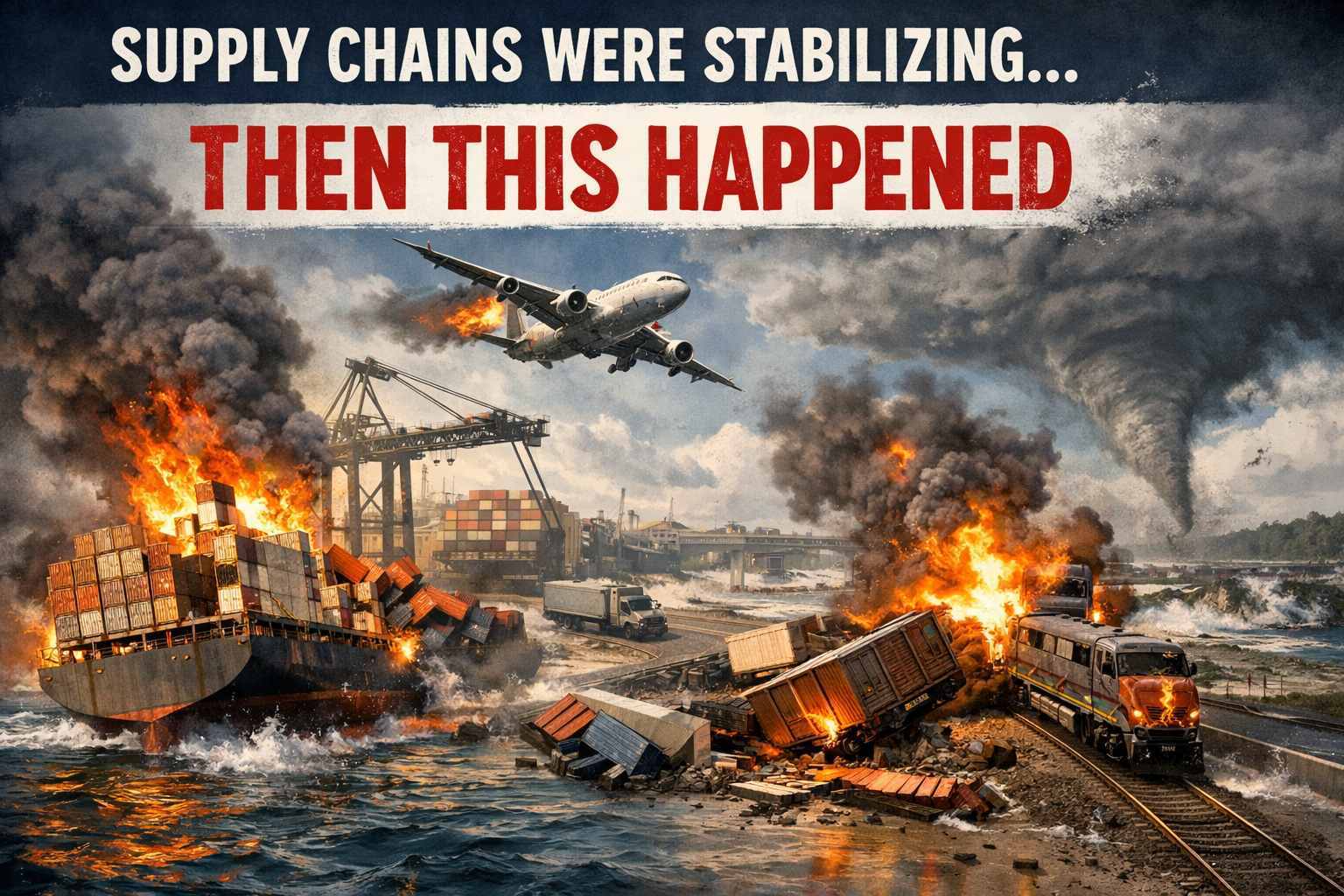

Supply Chains Were Stabilizing — Then This Happened
March 2026
Asia Agent Ltd Pte
For a few months, things felt calmer.
Freight was predictable.
Lead times improved.
Factories were quieter.
Buyers started to breathe again.
That didn’t last.
Now pressure is building again — just in different places.
And most buyers are looking in the wrong direction.
What actually changed
This isn’t one event.
It’s multiple pressures hitting at the same time:
- energy routes disrupted
- freight risk rising again
- upstream materials tightening
- enforcement expanding quietly
Individually, none of these break supply chains.
Together, they do.
Why this feels confusing
From the outside, nothing looks wrong.
Factories are not overloaded.
Ports are not blocked.
Prices haven’t exploded.
So buyers assume:
“Things are stable.”
But stability in supply chains is not about what you see.
It’s about what is building underneath.
Pressure doesn’t disappear. It moves.
In the last two years, pressure sat in:
- China tariffs
- port congestion
- container shortages
Now it moved into:
- energy
- upstream materials
- compliance
- supplier behavior
That shift is easy to miss.
Until it hits your orders.
What suppliers are already adjusting
Factories react before buyers do.
Right now, across China, Vietnam, and ASEAN, we see:
- more cautious material purchasing
- shorter quote validity
- hidden price buffers
- more “depends on timing” answers
- faster yes — weaker planning
They don’t say “risk increased.”
They adjust behavior.
The dangerous signal buyers ignore
Factories are not busy.
You said it yourself:
- smaller POs
- empty lines
- weaker demand
That feels like opportunity.
It is.
But it’s also risk.
Because when factories are not full, they start:
- chasing orders
- accepting unrealistic terms
- compressing margins
- planning loosely
That’s when mistakes begin.
Freight risk is coming back quietly
Freight doesn’t spike overnight anymore.
It creeps.
- insurance rises first
- routes adjust
- schedules shift
- capacity tightens
By the time buyers react, costs are already locked in.
Enforcement is expanding — without announcements
No big headlines.
But:
- more origin checks
- more document consistency checks
- more cross-border data matching
This is not new regulation.
It’s better enforcement of existing rules.
That’s harder to avoid.
What this means for buyers
This is not a crisis.
It’s a transition.
From:
- visible disruption
To: - invisible pressure
And invisible pressure is more dangerous.
Because it shows up late.
The buyer mistake right now
Most buyers are doing this:
- negotiating harder on price
- placing smaller orders
- relying on supplier promises
- assuming flexibility is safe
This worked when supply chains were stressed.
It fails when supply chains are unstable underneath.
What smart buyers are doing differently
They are not reacting.
They are tightening.
- locking pricing logic early
- verifying supplier capacity
- confirming material availability
- aligning documents before production
- increasing inspection frequency
- staying present during production
Not more work.
Better control.
Asia Agent perspective
We’ve seen this cycle before.
When supply chains look calm, they are usually resetting.
That reset creates:
- opportunity
- instability
- leverage
- risk
All at the same time.
The difference is not the market.
It’s visibility.
Final thought
Supply chains didn’t break again.
They shifted again.
Buyers who understand where pressure moved will stay in control.
Buyers who don’t will feel it — later, and more expensively.
1) Are supply chains unstable again?
Not visibly. But pressure is building underneath.
2) Is freight going up again?
Early signs show rising risk, not full spikes yet.
3) Why are factories quieter this year?
Lower demand and smaller orders across sectors.
4) Is this good for buyers?
It creates leverage — but also increases hidden risk.
5) What is the biggest risk right now?
Suppliers accepting orders they can’t execute cleanly.
6) Is China still the main risk?
No. Pressure has spread across Asia.
7) Should buyers reduce order size?
Not necessarily. Smaller orders often get lower priority.
8) What should buyers check first?
Material availability and real production capacity.
9) Is compliance tightening?
Yes, through enforcement, not new rules.
10) What’s the safest strategy now?
Visibility, verification, and presence.