The real map.
Every supplier and sub-supplier for each product, down to raw material, and how they connect. Not the sales profile. The real chain.

Know who really makes your product, and prove where it's made.
Most importers know the supplier on the invoice. CBP and the EU now ask about everyone behind it: who made the parts, where the real manufacturing happens, and who got paid.
We map the real chain, down to raw material, in every country you make in. Then we build the records that prove it.
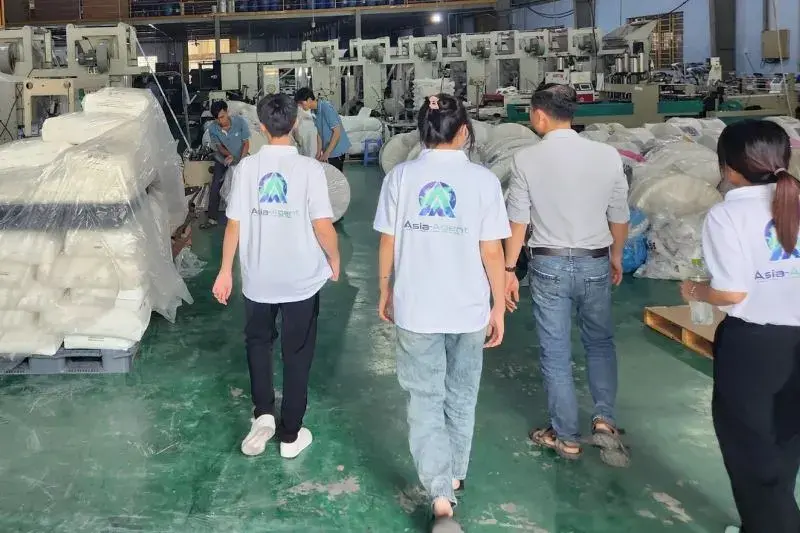
Knowing the factory is not the same as knowing the chain. Behind most products sit a trading company, a main factory, a handful of sub-suppliers and the people who made the raw materials. Each one is a place where quality, cost, origin or payment can go quietly wrong.
That's not a reason to worry. It's a reason to look once, properly, and write it down. Most suppliers are good, and the map usually shows it. When something isn't right, you learn it before the order, not at the port.
The result is simple: you can answer "where was this made, from what, and by whom?" for every product, in every country, with records to back it.
If one supplier in one country is all you need to understand, we can work with you directly, month to month: China Agent Ltd for China, and Vietnam-Agent.com and India-Agent.com for those hubs.
Every supplier and sub-supplier for each product, down to raw material, and how they connect. Not the sales profile. The real chain.
How the product is actually built, step by step, with the machines, the process and the skills the line needs. Documented well enough that another supplier could repeat it.
For each product, the records that show where the real manufacturing happens: production records, purchase records and shipment records that line up. This is what CBP and the EU look for.
Business license, ownership, capability and export readiness for each supplier, seen face to face.
Who you are actually paying, the bank and beneficiary structure, and where the money goes, before funds are released.
A short list of what to lock in before production: contracts, simple procedures and quality gates. Plus a risk review in plain words: where a part could be swapped, where one supplier holds too much leverage, where duty exposure sits, and what to fix first.
A call to understand your product, your suppliers and your volume. We confirm what to look at first, and the price, in writing.
In each hub, we sit down with your suppliers, face to face. We explain what's needed and why. That's how the records actually get handed over. Visits in each country are usually done within days once they're scheduled.
We build the map, the production flow and the origin evidence, and check them against each other: purchase records, production records, shipments and payments.
You get the map, the evidence pack and the control plan, with a short walk-through.
A full bill of materials, mapped to the real sub-suppliers and not just the final assembler.
The machines, techniques and skills used today, and the control points where quality or substitution risks usually appear.
Business licenses, ownership, certificates, export documents and customs readiness, so nothing blocks a shipment later.
Whether the real transformation happens in the country you ship from, with the records to show it, product by product.
Who you are paying, whether the bank details match the company, and the common ways money gets diverted.
Substitution risk, capacity risk, hidden dependencies and the places where one supplier holds all the leverage.
From $5,000.
Most mapping projects run between $5,000 and $18,000. The price depends on the number of suppliers, the number of products, and how deep we go (sub-suppliers, production flow, compliance and payment checks).
Every project is scoped and priced in writing before you pay. You know the work, the price and the end date before we start. For larger volumes, mapping is often built into a bigger project and scoped with it.
The map is yours. What happens next is your choice.
Importers who make in China, Vietnam, India or several of them, and want to see the whole chain before placing serious orders. It's especially useful when you are scaling volume, changing suppliers, adding a country, or recovering from a supplier dispute or a customs question.
Most mapping projects take 2 to 6 weeks, depending on the number of suppliers, locations and the depth of checking. Visits in each country are usually done within days once they are scheduled.
US customs decides a product's origin by where it was substantially transformed, not where it was last packed or shipped from. Goods assembled from parts made elsewhere may not count as made in the country they ship from. Clear production records show where the transformation actually happened.
Then the map matters more. We look at each supplier on its own, find the weak links, and connect everything into one view, so your multi-country chain can be explained in one place.
When your plan needs a new factory, we help you find and qualify it. You sign with the factory directly. Asia Agent takes no commission or margin from any factory.
The map, the origin evidence and the control plan come from one team, built together. Your customs broker and trade counsel still advise and file.
It's yours. You can run it with your own team or any employer-of-record provider, or ask us to build the system around it. For month-to-month work with one supplier, China Agent Ltd covers China, and Vietnam-Agent.com and India-Agent.com cover those hubs.
Book a 30-minute meeting. We'll talk about your product, your suppliers and your volume, then scope the project in writing.
Tell us what you make, where, and who your suppliers are. We'll tell you what a map would cover and what it would cost.