India–EU Free Trade Agreement: What Importers in Asia Must Understand
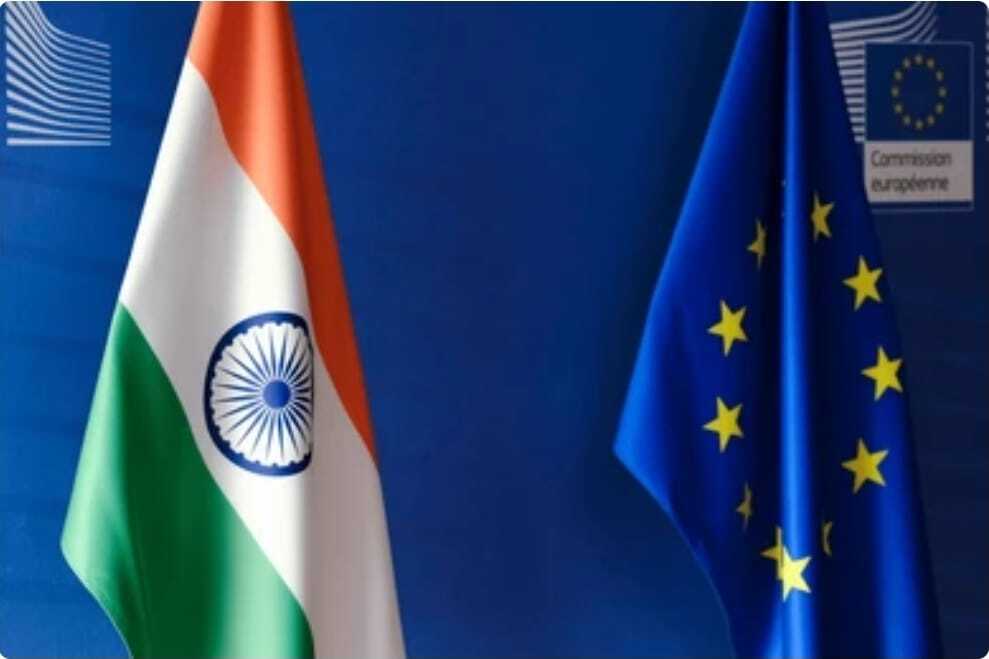
On January 27, 2026, India and the European Union finalized a landmark free trade agreement that leaders on both sides called the “mother of all deals.” It’s being hailed as one of the most significant trade pacts in recent decades.
This is not just a diplomatic headline.
For importers sourcing in Asia — including those in China, Vietnam, Indonesia, and beyond — the implications are real and operational.
Here’s why.
What the India–EU Deal Actually Does
The pact creates a preferential trade zone covering roughly two billion people and about 25% of global GDP.
It aims to:
- Eliminate or reduce tariffs on the majority of traded goods
- Boost raw materials and finished goods flow between India and the EU
- Increase market access for services and investment
- Encourage deeper supply chain integration across sectors
Under the agreement:
- India will reduce tariffs on most EU goods
- The EU will reciprocate on Indian exports
- Tariff reductions cover nearly 97% of trade value and over 90% of tariff lines by value — with phase-in periods across sectors.
This deal still requires formal ratification in India and the EU and is expected to be implemented in early 2027.
Why This Matters for Asia Sourcing — The Reality
Most importers in Asia look at such deals and think in terms of tariffs or market access.
Those are real changes.
But the practical implications for sourcing, compliance, and risk are deeper and often unspoken.
Here’s the operational view:
1. Export flows will reroute — and that changes supplier behavior
A major trade agreement between two large markets encourages exporters to:
- realign production to target new demand
- shift focus from regional buyers to global buyers
- reprioritize available capacity
For factories in India, Vietnam, and neighboring hubs, this means competition for capacity changes at the margin.
Factories that previously prioritized long-term foreign orders may now chase India–EU oriented volumes.
That doesn’t mean your order disappears.
It means your supplier’s allocation logic shifts.
This changes negotiation dynamics, delivery windows, and urgency thresholds.
2. Origin narratives and documentation will matter more
Trade deals exist to reduce tariffs — legally.
They also create enforcement expectations.
When two large economies eliminate tariffs, they expect rigorous documentation:
- proof of origin
- value flow matching declaration
- traceability from supplier to export entry
- evidence that transformation satisfies FTA rules
FTA systems have built-in safeguards to prevent misuse.
If your supplier cannot prove origin under India-EU rules, those shipments may not benefit from tariff preferences — and could attract scrutiny.
This is similar to how U.S. and EU regulators enforce origin proof today on China and ASEAN imports. Importers must prove transformation, not assumption.
3. The deal will increase cross-region supply chain complexity
India’s trade deal with the EU comes amid a broader global shift:
- U.S.–India interim trade frameworks are advancing
- India is opening sectors previously protected by high tariffs
- Global buyers are diversifying beyond China and Vietnam
This increases the number of supply chain routes that need documentation discipline.
Vietnam and Indonesia connect suppliers, components, and buyers across multiple zones.
With the India–EU deal, Indian exporters may integrate deeper into Southeast Asian supply networks — bringing new layers of origin and compliance risk.
Your documentation must reflect reality, not assumptions.
4. Price signals may lag risk signals
Trade agreements often take years to materialize into export volume changes.
But supplier behavior can change much faster:
- factories adjust quotes quickly
- lead times compress or extend
- pricing shifts with demand signals
- subcontracting increases under capacity pressure
Importers chasing price without verifying supplier capability and documentation discipline will be exposed.
This is the core lesson from every trade liberalization phase:
Price follows compliance. Risk follows price.
5. Compliance — not cost savings — will define winning supply chains
For U.S. and EU importers dealing with goods linked to India and Asia supply chains, three compliance realities are emerging:
- Origin proof is a negotiable resource.
Tariff preferences only apply if origin is defensible. - Documentation must match reality.
Invoices, packing lists, BOMs, and declarations must tie together — across countries. - Supply chain transparency matters.
Audit readiness and supplier verification are not optional.
In this environment, buyers who rely on informal processes or trust without verification find themselves explaining shipments — not defending prices.
Compliance is not a cost.
It’s your market access defense.
What Asia Agent Recommends for Importers Now
If your supply chain touches India, the EU, or ASEAN in 2026–2027:
1. Verify origin early
Don’t wait until tariff claims are filed at destination customs.
2. Map multi-national supply networks
Know who makes what, where key transformations occur, and how components flow.
3. Align invoices with declarations
Don’t just collect paperwork — validate logic across documents.
4. Monitor capacity and delivery behavior
Trade deals change incentives. Factories adjust priorities. Buyers must stay aware.
5. Prepare for layered compliance
India–EU, U.S.–India, and U.S.–EU mechanisms may interact. Be audit-ready.
Final Perspective
The India–EU Free Trade Agreement is a milestone in global trade.
For importers sourcing in Asia, it is a signal of change — not an endpoint.
Trade lanes evolve.
Compliance expectations sharpen.
Supplier behavior adapts.
Importers who think only in terms of tariffs will miss where the real risk and opportunity live:
in documentation discipline and proven supply chain reality.