
Supply Chains Are Shifting Again — But Not Where Buyers Are Looking
March 2026
Asia Agent
Nothing looks broken.
Ships are moving.
Factories are running.
Quotes are coming in.
So buyers assume:
“Things are stable.”
They’re not.
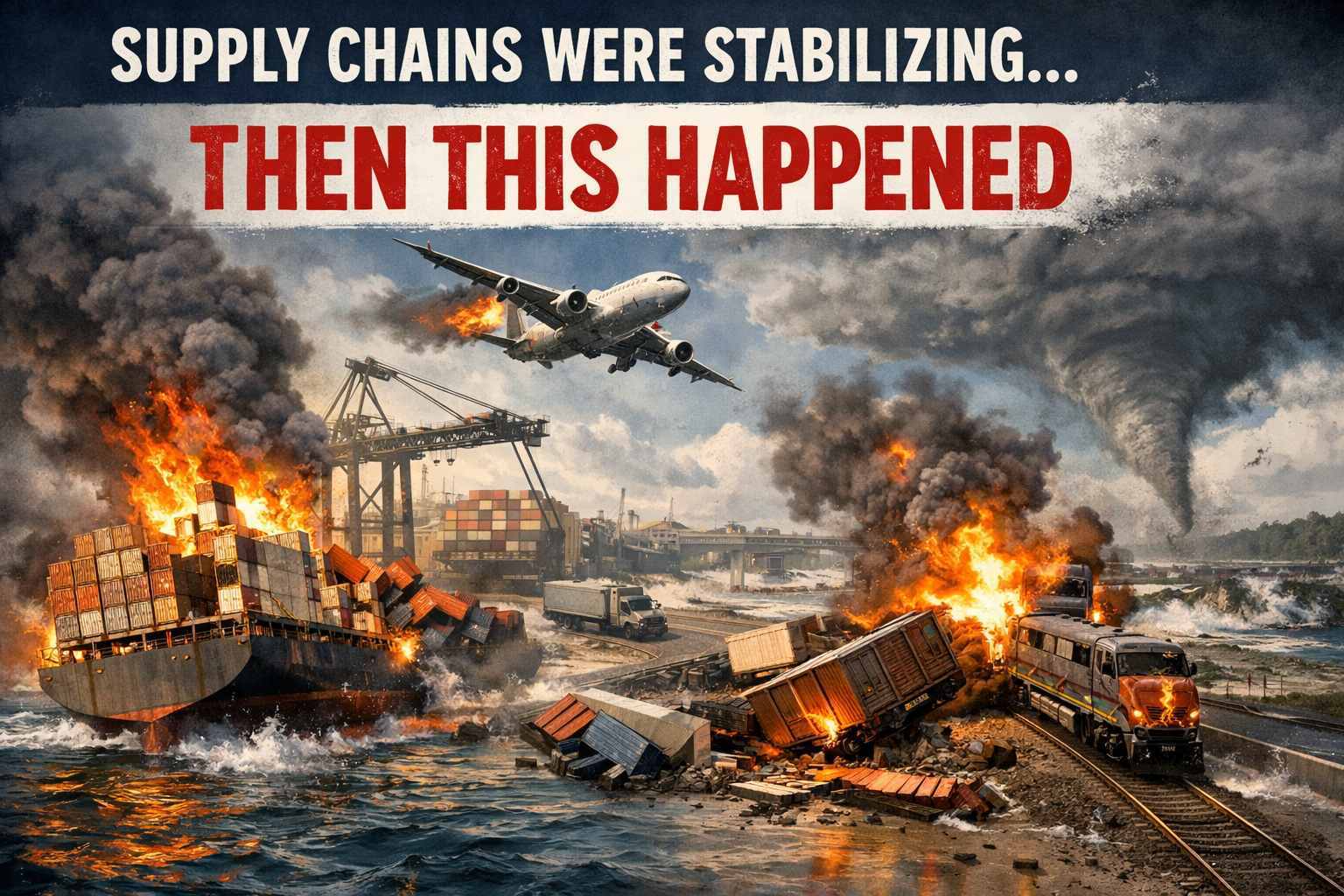
Supply chains are shifting again — just not in the places buyers are watching.
The mistake: watching the wrong signals
Most buyers track:
- freight rates
- factory utilization
- headline tariffs
Those worked in the last cycle.
Because disruption was visible.
Ports were blocked.
Containers were missing.
Costs exploded.
You could see the problem.
This cycle is different.
Where the pressure actually moved
Right now, pressure is building in places that don’t show up clearly:
- energy routes
- shipping rerouting
- upstream materials
- supplier cash flow
- compliance enforcement
None of these break the system immediately.
They weaken it.
Why this feels like stability
Because the system is still functioning.
- factories are not overloaded
- lead times look manageable
- pricing hasn’t jumped yet
This creates a false signal:
“We’re back to normal.”
But “normal” now includes hidden instability.
Freight risk is back — just slower
This is not COVID.
There’s no sudden spike.
Instead:
- routes are adjusting
- insurance costs are rising
- schedules are shifting
- capacity is tightening quietly
By the time buyers react, costs are already embedded.
The political layer is growing
Trade is no longer just economics.
It’s strategy.
You’re seeing:
- EU pushing new trade agreements
- supply chains being redirected
- countries securing inputs
- enforcement expanding
This doesn’t stop trade.
It reshapes it.
Vietnam is rising — and that changes behavior
Vietnam is no longer the backup plan.
It’s becoming a primary lane.
That brings:
- more demand
- more attention
- more scrutiny
- more pressure on suppliers
Same pattern China went through.
Growth brings enforcement.
What suppliers are doing right now
They don’t explain this.
They adjust.
Across China, Vietnam, and ASEAN:
- quotes valid for shorter periods
- more “depends on timing” answers
- cautious material purchasing
- hidden buffers in pricing
- faster acceptance of orders
This is not random.
It’s adaptation.
The dangerous combination
You’re seeing two things at once:
- Softer demand
- Rising upstream pressure
That leads to:
- hungry factories
- unstable inputs
- aggressive quoting
- weaker execution
Factories say yes more easily.
That’s not a good sign.
What buyers get wrong
Most buyers respond by:
- pushing price harder
- placing smaller orders
- relying on flexibility
- switching suppliers faster
This worked when supply chains were constrained.
It doesn’t work when they are unstable underneath.
What smart buyers are doing
They are not reacting to what looks calm.
They are managing what is shifting.
- verifying supplier capacity
- confirming material availability
- locking pricing logic early
- reducing last-minute changes
- increasing inspection frequency
- staying present during production
They focus on control.
Not assumptions.
Asia Agent perspective
We’ve seen this cycle before.
The most dangerous phase is not disruption.
It’s the phase before disruption becomes visible.
That’s where we are now.
Nothing is breaking.
But everything is adjusting.
Final thought
Supply chains didn’t stabilize.
They evolved.
The pressure didn’t disappear.
It moved.
Buyers who understand where it moved will stay ahead.
The rest will feel it — later, and more expensively.
FAQ
1) Are supply chains unstable again?
Not visibly. But pressure is building underneath.
2) Why doesn’t this show up in pricing yet?
Because cost shifts usually lag behind supply pressure.
3) Is freight risk increasing?
Yes, but gradually — not suddenly.
4) Why are factories quieter this year?
Lower demand and smaller order sizes.
5) Is that good for buyers?
It creates leverage, but also increases hidden risk.
6) What is the biggest hidden risk now?
Suppliers accepting orders they cannot execute cleanly.
7) Is Vietnam becoming riskier?
It’s becoming more important — which brings more scrutiny.
8) What should buyers verify first?
Material availability and real production capacity.
9) When do problems usually appear?
Later — during production or shipment.
10) What is the safest approach?
Visibility, verification, and presence.