
Supply-Chain Shockwaves 2025
The EU moves on raw materials, the U.S. tightens enforcement — and Asia is now the center of gravity
The global supply chain is shifting again.
Not because of a surprise.
Because the world’s biggest markets are finally acting on what they’ve been signaling for years:
dependency on China is now a vulnerability, not an advantage.
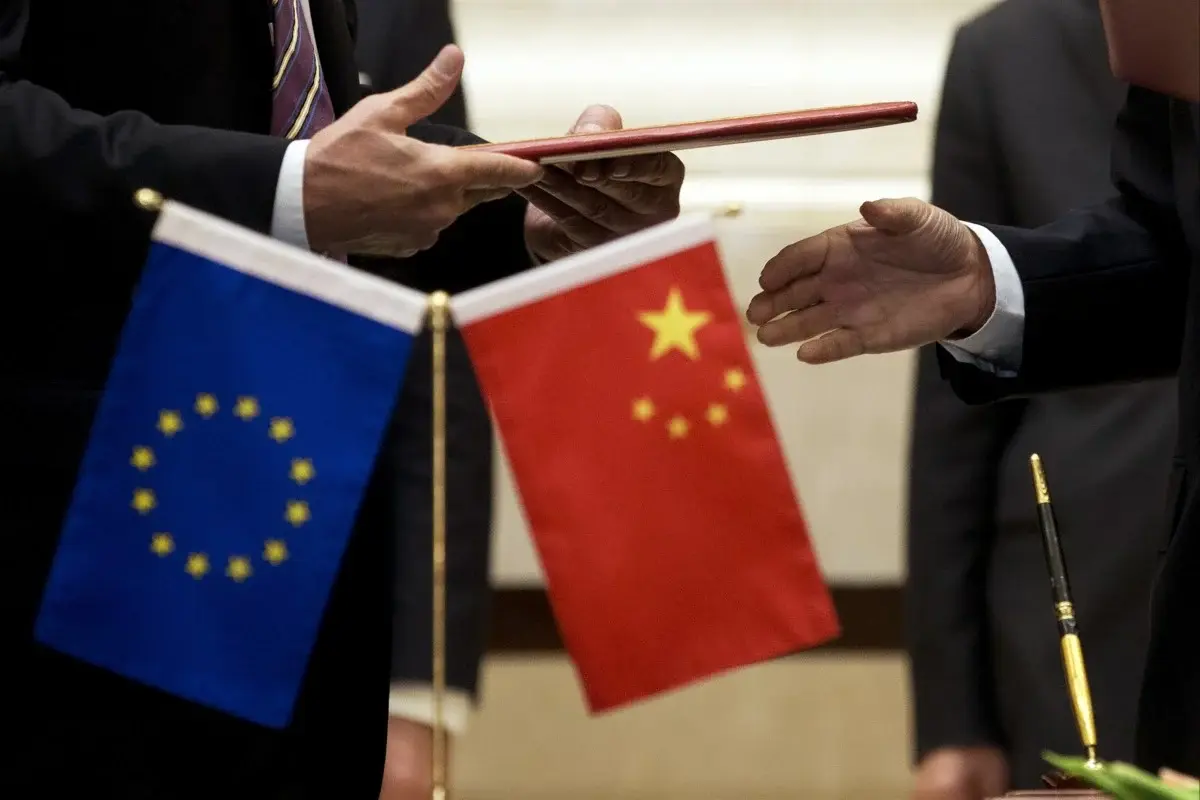
This week, the European Union confirmed its plan to reduce reliance on Chinese raw materials.
At the same time, U.S. regulators are moving from tariff headlines to full-spectrum enforcement — AI-driven monitoring, task-force coordination, and upstream origin screening.
For importers, these aren’t separate stories.
Together, they’re a reshaping of the global operating environment.
And the epicenter of that shift sits in Asia.
The EU’s critical-raw-materials pivot
Reuters reported that the EU is preparing a strategy to cut its dependence on China for critical raw materials — the inputs behind everything from batteries to consumer electronics to industrial components.
For the EU, this isn’t about politics.
It’s about resilience.
The plan includes:
reshoring strategic minerals,
diversifying suppliers,
tightening screening of China-linked sourcing,
and building guardrails against hidden Chinese inputs.
It’s slow, but it’s decisive.
And it shows that China-dependency is no longer treated as a cost advantage. It’s treated as risk.
The EU is late to this realization.
But they are moving — and once Europe shifts, global suppliers feel it.
The U.S. tightens the screws in parallel
While Europe talks strategy, the U.S. is already executing.
With CBP integrating Altana’s AI into its enforcement system, and the DOJ/DHS Trade Fraud Task Force coordinating investigations across agencies, the enforcement environment has moved to a new phase:
real-time monitoring,
deeper upstream tracing,
cross-border ownership screening,
focus on China-linked materials,
and a lower threshold for investigations.
This is not “tariff season.”
This is the beginning of continuous enforcement.
U.S. regulators aren’t just checking country-of-origin labels anymore.
They’re checking who actually made the components, who owns the factory, and where the materials came from before they were assembled in Vietnam or Malaysia.
The gap between compliance and exposure is shrinking.
Fast.
These two moves hit the same target
Europe wants new raw-material sources.
The U.S. wants clean origin and defensible supply chains.
And China is redirecting exports across ASEAN, Africa, and the Middle East to relieve tariff pressure.
These three shifts converge on one point:
Opaque supply chains are now the highest-risk business model in the world.
If your supply chain still relies on Chinese raw materials hidden behind ASEAN assembly, you’re on the radar.
If your supplier doesn’t disclose upstream sourcing, you’re exposed.
If you still treat compliance as paperwork instead of evidence, you’re behind.
This is the shockwave.
And it’s already moving.
Asia becomes the new compliance battlefield
Vietnam, Thailand, Malaysia, Indonesia — they all want to be the “trusted alternative” to China.
But trust is not self-declared.
It’s earned through structure.
And most factories in the region weren’t built for the scrutiny now coming from the U.S. and EU.
They were built for speed and volume.
Today, importers need something different:
verified materials,
clear transformation steps,
transparent sub-suppliers,
and clean, auditable documentation.
Asia is where the opportunity is.
It’s also where the exposure is.
Importers must assume that every China-linked input — aluminum, steel, batteries, plastics, chemicals, textiles — will be tested both upstream and downstream.
The importer’s dilemma
You can diversify without building structure.
But you can’t survive enforcement without it.
Moving production to Vietnam isn’t enough.
Buying materials locally isn’t enough.
Switching assemblers isn’t enough.
Without evidence, all you have is a story.
And regulators don’t accept stories.
Europe wants proof that your materials aren’t Chinese.
The U.S. wants proof that your transformation is real.
And China is adjusting its own flows in a way that creates even more complexity for anyone in the middle.
This is the tension importers must solve.
The Asia Agent approach
We don’t treat compliance as a reaction.
We treat it as infrastructure.
Supplier Verification
We identify ownership, upstream sourcing, capital structure, and China-linked risk before regulators do.
Raw-Material Mapping
We trace aluminum, steel, plastics, chemicals, yarn, batteries — the inputs regulators now care about.
On-Site Evidence
Geo-tagged inspections, production flow documentation, process-level verification.
Origin & Transformation Analysis
We tell you whether your origin claim will survive a CBP or EU challenge — and how to fix it if it won’t.
Audit-Ready Files
Every SKU gets a file built for enforcement, not marketing.
Continuous Monitoring
Suppliers change inputs without telling you.
We catch it before CBP does.
This is the difference between resilience and exposure.
Perspective
The EU wants new raw-material sources.
The U.S. wants traceable supply chains.
China is rerouting exports.
And global manufacturers are trying to adapt in real time.
This is not chaos.
It’s re-alignment.
The winners in the next decade will be the companies that understand one simple truth:
Globalization is still here — but now it comes with rules.
And the rules demand proof.