
India Is Real Now. Here's What the AirPods Data Actually Tells You About Manufacturing There.
Asia Agent Pte Ltd
May 2026
The Data Point Everyone Is Talking About
India's share of global AirPods production went from 1% in 2025 to 4% in Q1 2026. Vietnam dropped from 64% to 62%. China from 35% to 34%.
Small numbers. Big signal.
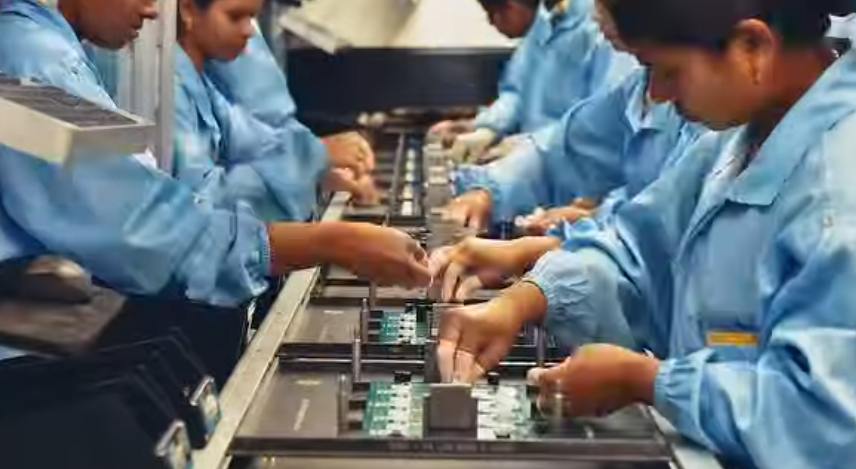
Foxconn's Hyderabad facility started AirPods production in April 2025. By October they were planning to double capacity from 100,000 to 200,000 units per month. Workforce scaling from 2,000 to 5,000 people. Machinery being transferred directly from Vietnam. A $550 million facility commitment. A second Foxconn plant in Bengaluru — 220 football fields — targeting 20 million iPhones per year.
Apple is building a real manufacturing base in India. That's not a rumour. That's capital expenditure.
And every week, I get a message from a brand asking: should we go to India?
The honest answer is: it depends. And the things it depends on are not the ones most people ask about.
What the AirPods Story Actually Tells You
The Foxconn-Apple India story is real. It's also a specific kind of manufacturing — high-volume, highly standardised, backed by a $550 million facility, built on a decade of government incentives, with Apple's full supplier network moving in behind it.
That is not the story of a mid-size brand moving 5,000 units of a consumer product to an Indian factory.
What Apple proved is that India can do precision electronics assembly at scale, with the right infrastructure investment and the right institutional support. What it didn't prove is that the Indian manufacturing ecosystem is broadly ready for any buyer with any product at any volume.
The two stories are not the same. Knowing the difference before you make a commitment is the difference between a smooth transition and an expensive lesson.
What India Manufacturing Actually Looks Like on the Ground
India is a large, complex, regionally fragmented manufacturing market. The factory you're looking at in Tamil Nadu operates in a fundamentally different environment than one in Gujarat, Rajasthan, or Uttar Pradesh. Here's what matters.
The strengths are real — and category-specific.
India is genuinely strong in apparel, home textiles, leather goods, footwear, handicrafts, certain chemicals, and increasingly in electronics assembly. If your product falls into one of these categories and your volume is right, India can work very well.
Tiruppur for knitwear. Agra for leather. Moradabad for brassware. Jaipur for textiles and jewellery. These are not emerging clusters. They are established, experienced, and globally connected. Factories in these hubs have been exporting to the US and EU for decades.
The weaknesses are also real — and often invisible until you're mid-production.
Infrastructure outside the major industrial zones is inconsistent. Power reliability varies. Road and port logistics are improving but remain slower than China. Lead times at equivalent volume are typically 15-25% longer than comparable China production.
Factory management practices vary enormously between facilities and regions. A factory that runs a clean, well-documented operation in one district may be operating beside facilities with minimal process controls. Unlike China, where decades of export manufacturing have created relatively standardised factory practices, India's export manufacturing base is younger and less uniform.
Labour is abundant. Skilled labour for precision manufacturing is less so. Training timelines are longer than China. Turnover in some regions is high.
The rare earth disruption is worth understanding.
When China temporarily halted rare earth exports in April 2025, Foxconn's Hyderabad facility faced a dysprosium shortage that disrupted AirPods production until the export curbs were lifted in August. Four months of disruption in a facility with $550 million behind it.
If you're sourcing components from China for assembly in India — which most factories do — your India manufacturing is not insulated from China supply chain risk. It's just one step removed. Know your tier-two supply chain before you commit to an India assembly strategy.
The Three Questions to Answer Before You Go to India
1. Is your product category actually suited to Indian manufacturing?
India works for apparel, textiles, leather, handicrafts, certain consumer goods, and electronics assembly at scale. It does not yet work well for precision tooling, complex injection moulding, high-tolerance metal fabrication, or highly technical product categories that require deep supplier ecosystems. If your product requires 40 components sourced locally, ask where those components come from in India. The answer shapes whether the move makes sense.
2. Do you have a verified factory relationship — or just an introduction?
India's factory landscape is fragmented. A trade show introduction, a B2B platform listing, or a broker referral is not a verified factory relationship. You need someone on the ground who has visited the facility, knows the production manager, understands the regional manufacturing culture, and can tell the difference between a factory that will perform and one that looks good on paper.
Factories in India that present well in a Zoom call sometimes look very different on the factory floor. The reverse is also true — strong producers in tier-2 cities often have minimal English-language marketing and don't show up in the obvious directories. Ground-level knowledge matters here more than almost anywhere.
3. What does your full landed cost model actually say?
India's labour cost advantage over China is real. The question is whether it survives the full landed cost calculation. Add: longer lead times and their carrying cost. Higher freight rates from Indian ports compared to South China. Potential quality rework on first-run production. The cost of your on-ground presence to manage the relationship. Slower payment term norms in Indian manufacturing.
Run the model fully before you run toward India.
What India Offers That Vietnam and China Don't
Once you've done the honest assessment and India fits — it genuinely offers things the other hubs don't.
Duty advantages are significant. India has trade agreements with several major markets that China and Vietnam don't. The US-India trade framework is being actively developed. For certain product categories, the duty differential is already material.
Government support is real. India's Production Linked Incentive schemes are substantial. For categories like electronics, apparel, and pharmaceuticals, direct production incentives are available. The bureaucratic navigation is complex — but the incentives are genuine.
The English language advantage is underestimated. Across India's manufacturing base, English is a working language at management level in a way it simply isn't in China or Vietnam. For Western buyers managing supplier relationships from a distance, this reduces miscommunication risk significantly.
Political stability for manufacturing investment is higher than Vietnam. Vietnam carries concentration risk — too much of the world's manufacturing capacity is flowing in too fast. India's manufacturing base is large enough to absorb significant FDI without the capacity crunch that's squeezing Vietnam's factory floors.
What Asia Agent Does in India
Asia Agent operates on the ground in India across apparel, consumer goods, home goods, and light manufacturing categories. We connect clients directly to real factories — not agents, not trading companies, not sourcing platforms.
We verify factory registration, production capacity, and quality systems before any production commitment. We manage the relationship through production and sign off on shipment before goods load.
Our rule doesn't change by country: No inspection, no load.
India is real. Getting it right requires the same on-ground discipline as any other hub.
Frequently Asked Questions
Is India a viable manufacturing alternative to China in 2026? Yes, for specific product categories. India is strong in apparel, textiles, leather goods, footwear, handicrafts, and electronics assembly at scale. It is less developed for precision tooling, complex components, and product categories requiring dense local supplier ecosystems. The AirPods production data confirms India can perform at volume — but the conditions that made that possible don't automatically apply to every buyer or product.
What product categories work best for manufacturing in India? Established strengths include knitwear (Tiruppur), leather goods (Agra), brassware and metalware (Moradabad), textiles and jewellery (Jaipur), and footwear. Electronics assembly is growing rapidly, anchored by Foxconn and Tata investments in Hyderabad, Bengaluru, and Tamil Nadu. Pharmaceuticals and chemicals are also strong. Precision manufacturing, complex tooling, and highly technical categories remain better suited to China.
How do Indian factory lead times compare to China? At equivalent volume, Indian lead times typically run 15-25% longer than comparable China production. Infrastructure variability outside major industrial zones, port congestion, and longer domestic logistics add time to the production cycle. Factor this into your inventory planning and cash flow model before committing to India production.
Does manufacturing in India remove my supply chain's exposure to China? Not necessarily. Most Indian factories source components, raw materials, and intermediate goods from China. If your assembly happens in India but your components are Chinese-origin, a China supply chain disruption — export controls, rare earth restrictions, logistics bottlenecks — will still affect your production timeline. Know your tier-two supply chain before you characterise India production as China-independent.
What are the duty advantages of manufacturing in India versus China or Vietnam? India has active trade agreements with the UAE, Australia, and several ASEAN markets, with a US-India trade framework in active development. For categories covered under these agreements, duty differentials versus China are material. Specific advantages depend on your product's HTS classification and destination market. Run a classification-specific landed cost comparison before assuming India wins on duty.
How do I find a real factory in India versus a broker or trading company? Most Indian factories that reach Western buyers do so through agents, sourcing platforms, or trade shows — all of which add a layer between you and the production facility. A real factory relationship requires physical verification: visiting the facility, meeting production management, confirming machinery capability and current order load, and verifying business registration. Ground-level presence in India is the only reliable way to distinguish a genuine manufacturer from a middleman with a factory tour.
What does Asia Agent do in India specifically? We connect clients directly to verified factories in India across apparel, consumer goods, and home goods categories. We conduct facility verification before any production commitment, manage the supplier relationship through production, and conduct pre-shipment inspection before load authorisation. We do not source, act as middlemen, or take margin on production. Direct factory connection, ground-level management, no inspection no load.