
If a supplier tells you a product is "Made in Vietnam" right after tariffs hit China, treat that as a claim, not a fact. Knowing how to verify country of origin is not a paperwork exercise. It is a risk-control function tied directly to duty exposure, customs holds, forced labor scrutiny, labeling violations, and whether your supplier is telling you the truth about where your goods are actually made.
A lot of importers make the same mistake. They check the commercial invoice, see a certificate of origin, and assume the issue is closed. It is not. Country of origin is not whatever the seller prints on a document. It is determined by where the product was wholly obtained or where it underwent substantial transformation under the applicable rules. Those are two very different things, and suppliers regularly blur them when they think the buyer is not looking closely.
What country of origin actually means
Country of origin is the country customs authorities recognize as the origin of the product for import purposes. That can affect duty rates, trade remedy exposure, admissibility, marking requirements, and compliance reviews. In plain terms, it decides what rules apply when your goods hit the border.
For simple goods, the answer can be straightforward. If agricultural goods are grown and harvested in one country, origin is usually clear. For manufactured goods, especially products assembled from parts sourced across several countries, the answer depends on the production process. Final assembly alone does not automatically create a new origin. Neither does repacking, relabeling, or minor processing.
That is where buyers get burned. A supplier may buy Chinese components, perform light assembly in a second country, and declare the second country as origin. Sometimes that is legally supportable. Often it is not. It depends on the product, the transformation performed, and the governing customs rules.
How to verify country of origin without relying on supplier claims
If you want a real answer, you need to trace the production flow backward from the shipped item to the factory floor. Documents matter, but documents alone are weak if the factory structure is opaque or the production path is inconsistent.
Start with the manufacturer identity. Not the trading company on the quote sheet, and not the exporter listed for convenience. You need the legal entity operating the factory, the physical production address, and confirmation of what processes are actually performed there. If a supplier avoids giving you the factory name or keeps shifting the story between office, warehouse, and workshop, that is already a warning sign.
Next, map the bill of materials against the production steps. Ask where key components come from, where subassemblies are built, and which stage changes the commercial identity of the goods. For example, if a bag is cut, sewn, and finished in Cambodia using imported fabric, there may be a stronger basis for Cambodian origin than if finished Chinese bags are merely packed there. If an electrical product uses imported boards, housings, and wiring but the factory performs full assembly, testing, calibration, and firmware loading in Thailand, the analysis gets more fact-specific. You cannot settle that with a one-line declaration.
Then compare the claimed origin to capacity reality. Does the factory have the labor, machinery, tooling, throughput, and technical capability to perform the transformation it claims? This is where remote buyers get fooled. On paper, a facility can "produce" almost anything. On site, you may find one line doing packaging while real manufacturing happens elsewhere.
The documents that help - and their limits
To verify country of origin, you should review the commercial invoice, packing list, purchase order, supplier declaration, certificate of origin if applicable, manufacturing records, and shipping documents. But treat every document as one piece of evidence, not final proof.
A certificate of origin can be useful, but it is not magic. In many cases it reflects information submitted by the exporter. It may support a claim, but it does not replace an origin analysis. The same goes for invoices that show a non-Chinese seller or a shipment routed through a third country. Routing does not change origin.
Production records usually tell you more. Material receiving logs, work orders, line assignment sheets, in-process inspection records, and finished goods output reports can show whether manufacturing actually occurred where the supplier says it did. Raw material and component purchase records also matter. If the factory claims large-scale production in one country but cannot show matching inbound material volumes, labor records, or machine utilization, the origin story is weak.
For higher-risk categories, look at export declarations, factory licenses, product-specific compliance files, and internal traceability records tied to lot numbers or date codes. The more origin matters to tariff treatment or enforcement exposure, the less room there is for assumptions.
Factory audits matter because subcontracting changes everything
One of the fastest ways to lose control of origin is hidden subcontracting. Your approved supplier may show you one factory, then push part or all of the order to a second facility you never reviewed. That second facility may be in a different country, may not meet your compliance standards, or may not perform the transformation needed to support the declared origin.
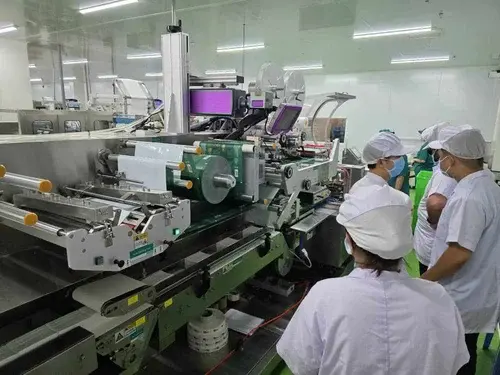
This is why desk review is not enough. You need direct factory verification and production path confirmation. That means confirming who owns the site, who manages it, what equipment is installed, what products are actually running, and whether output volumes line up with your order quantities and delivery window.
If a supplier says origin is Vietnam, but cutting is done in China, critical assembly is done in China, and Vietnam only handles final packing, you have a serious problem. Not a technicality. A real customs and false declaration problem.
On-the-ground verification is where weak origin claims usually fall apart. The discrepancies are rarely subtle. Mismatched business licenses, missing equipment, borrowed sample rooms, shared workshops, and impossible production schedules tell you quickly whether the declared origin is operationally credible.
How to verify country of origin for high-risk imports
Some categories deserve a stricter standard from the start. If your product falls under trade remedy scrutiny, anti-dumping or countervailing concerns, UFLPA sensitivity, forced labor review, or sudden tariff-driven country shifts, assume customs will look past the paperwork.
In those cases, ask harder questions earlier. Why did the supplier change origin countries? When did the factory start production there? What percentage of value is added locally? What exact process occurs in that country? Which components are imported, and from where? If the answers are vague, rehearsed, or inconsistent across teams, stop treating the file as clean.
You should also pressure-test timing. New country claims often appear overnight when buyers want a workaround to tariffs or geopolitical exposure. Real manufacturing migration takes time. New tooling, hiring, process qualification, pilot runs, yield stabilization, and supplier localization do not happen in a week because a salesperson said they do.
A practical verification standard for importers
The right standard is not perfection. It is reasonable, documented control. You want enough evidence to show that you tested the claim before import, understood the production route, and challenged inconsistencies.
That usually means five things. Identify the actual manufacturer. Verify the physical production location. Trace key materials and production steps. Review records that support real manufacturing activity. Confirm that no undisclosed subcontractor is changing the origin analysis.
If the shipment is commercially significant or legally sensitive, add an on-site audit before production and another verification during production. A pre-shipment inspection tells you what is ready to ship. It does not always tell you where the goods were really made.
This is also where a local execution partner can matter. Asia manufacturing rewards whoever is physically present, structurally involved, and hard to mislead. If origin risk is material to your duties, customs posture, or retailer obligations, remote email chains are a weak control system.
The mistake to avoid
The biggest mistake is treating country of origin as a labeling detail instead of a supply chain fact pattern. Once a bad claim is embedded in invoices, declarations, cartons, and customs entries, fixing it gets expensive fast. You are dealing with delayed cargo, redelivery risk, amended filings, supplier disputes, and potential exposure that could have been prevented with earlier verification.
Suppliers do not always lie outright. Sometimes they oversimplify. Sometimes they repeat what their own upstream factory told them. Sometimes they are using a definition of origin that works for sales, not customs. That distinction will not help you when the shipment is challenged.
If you want fewer surprises, verify origin the same way you verify quality or capacity - by following the evidence to the place where production actually happens. The closer you get to the factory floor, the harder it is for fiction to survive.