
Your own team in Asia, without your own entity
Your own team in Asia, without your own entity
Companies importing from Asia are moving from occasional inspections to permanent people on the ground. The reason is compliance: customs authorities now expect documentation that only exists inside a supplier's operation, and documentation like that is gathered by someone who is there, not by someone who visits twice a year.
The problem is that hiring someone in China, Vietnam or India normally requires a legal entity in that country. That's the gap this piece is about.
Why this is happening now
For twenty years the standard model was simple: buy from a supplier, inspect before shipment, ship. Verification was an event, not a function.
That model is under pressure. Enforcement has moved from checking paperwork at the border to auditing the supply chain behind it — where materials came from, who actually manufactured, whether declared values reflect real transactions, whether the origin claim survives inspection. The requests are broader than they used to be and the response windows are shorter.
None of that is answerable from a desk in New Jersey. It's answerable by someone who can walk into the factory, ask in the local language, and come back with production records rather than assurances.
So the question changes shape. It stops being "who inspects my order" and becomes "who works for me, there, permanently."
Three ways to put a person on the ground
Set up your own entity. A WFOE in China, a subsidiary in Vietnam. Full control, and you own the relationship completely. It also means registered capital, months of registration, local accounting, tax filings, annual audits, and a legal exit process if you ever want to stop. For a company hiring one to three people, the overhead usually costs more than the people.
Use a local agency or trading partner's staff. Fast and cheap. The catch is that the person works for them, not you. Their loyalty, their priorities, and their information flow belong to a company whose interests are not identical to yours — particularly if that company also profits from what you buy.
Employ through a local employer of record. A company that already has the entity and the compliance infrastructure employs the person legally, on your behalf. You direct their work; the EOR carries the employment. This is the structure most companies land on for small teams — but it varies enormously in quality, and the variation is not usually visible in the pricing.
What separates a good EOR arrangement from a bad one
How many layers sit between you and the employee. Many international EOR platforms don't employ anyone in China themselves. They contract a local provider, who sometimes contracts another. Each layer takes a margin and none of them answer to you. When you need something changed on a Thursday, you're waiting on a chain.
Whether the cost breakdown is visible. Employer costs in Asia are itemisable: base salary, social insurance, housing fund where it applies, allowances. A provider showing you one bundled number per head is hiding the split between what the person costs and what they're charging. That spread is worth knowing.
Whether they understand your actual work. A generalist EOR can process payroll for a software developer or a factory coordinator with equal indifference. Neither the platform nor the local subcontractor has an opinion about whether your new hire is being told the truth by a supplier — because it isn't their business to have one.
What happens when it ends. Severance obligations in most Asian jurisdictions accrue with service — roughly one month per year worked in China. Find out who funds that, how it's held, and what notice you owe, before the contract starts rather than while you're trying to leave.
What a person on the ground is actually for
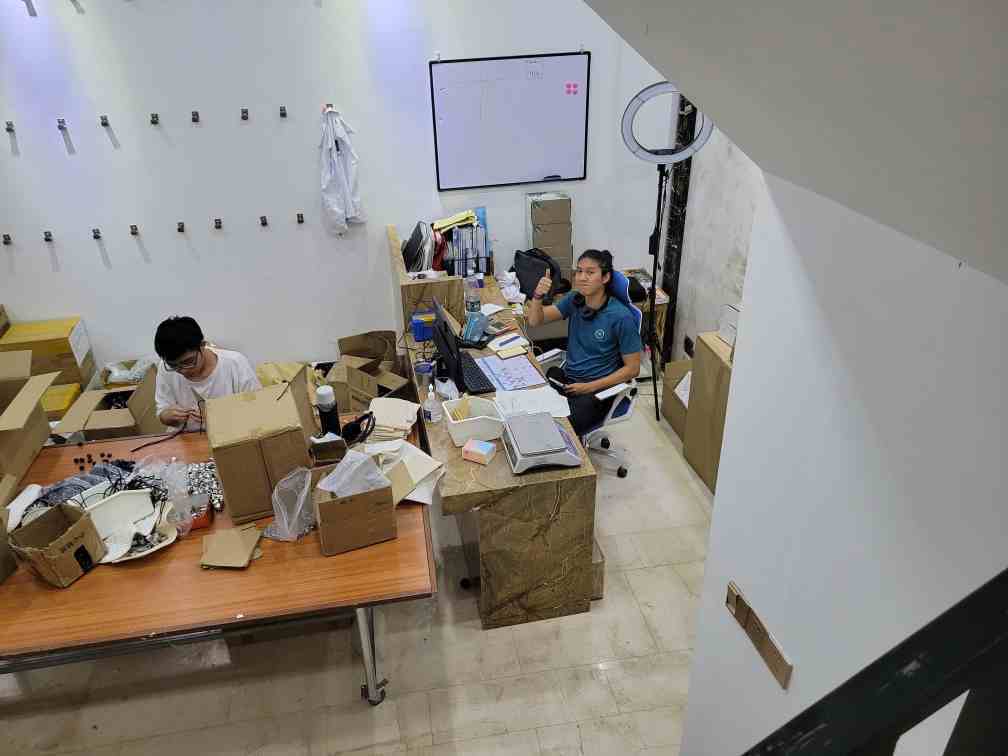
Worth being concrete, because "eyes and ears" is a slogan, not a job description. A well-used person inside your supply chain does things a visiting inspector cannot:
- Sits in the factory during production, not just at the end of it
- Collects the documentation that only exists locally — production records, material invoices, licences — while it's still current
- Handles the daily communication in the local language, where most misunderstandings begin
- Notices drift: a material substitution, a subcontracted process, a quiet change in who's actually building your product
- Gives you a version of events that isn't coming from the supplier
That's the difference between knowing what your supplier tells you and knowing what's true. It is also, increasingly, the difference between having your documentation ready and scrambling for it inside a twenty-day response window.
What it costs, roughly
A capable coordinator in a Chinese factory city runs somewhere between 5,000 and 15,000 RMB monthly salary depending on experience, language ability and city. Employer contributions add roughly 40% on top of the salary. On top of that sits whatever the employment provider charges for carrying the entity, the compliance and the payroll.
Two people running a small operation is a meaningful monthly commitment. Against a single detained container, a rejected origin claim, or a season of quality drift, most importers doing real volume find the arithmetic obvious.
The short version
The compliance environment is pushing importers from occasional inspections toward permanent presence. You don't need your own entity to get there — but you should know how many hands your money passes through before it reaches the person doing your work, whether anyone in that chain answers to you, and what happens when it ends.